
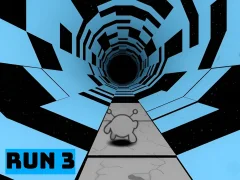

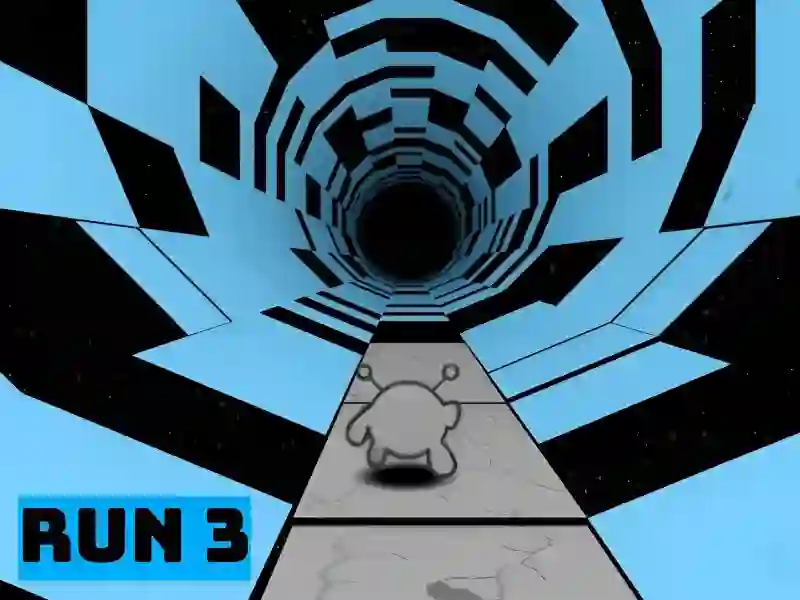
Run 3 og de tyngdekrafts-skiftende tunneler i dette arkadeløb
Run 3 slipper en lille alien løs i lysende rumkorridorer, og du holder den i gang ved at rotere banen, så gulvet kan blive til en væg eller et loft. Som en arkade-runner gør det hvert spring afhængigt af layoutet foran dig, med huller, pigge og ødelagte fliser, der dukker op i et barskt kosmisk miljø.
Drej tunnelen, før du springer
Din hovedopgave er at vende korridoren på det rigtige tidspunkt og så lande på den nye sikre overflade, før den næste åbning viser sig. Den rene visuelle stil hjælper dig med hurtigt at aflæse ustabile fliser, hvilket betyder noget i runs, der starter åbent og siden snævrer ind til smallere spor.
På PC er styringen enkel: brug ← eller A og → eller D til at bevæge dig, derefter ↑ eller Space til at springe, med R til at starte forfra, når en fejl sender dig ud over kanten.
Explore Mode med over 300 baner
Explore Mode strækker sig over mere end 300 baner med en løs historie, og hvert stykke tilføjer et nyt mønster af farer som forsvindende blokke eller trange broer. Hvis du kan lide presset i Tunnel Rush, giver denne mode dig den samme reaktionstest, mens den beder dig planlægge den næste rotation, før du overhovedet forlader jorden.
Ruten skifter form ofte nok til, at en sikker linje kan forsvinde på den næste skærm, så timing betyder mere end at haste frem.
Infinite Mode og forskelle mellem figurer
Infinite Mode er bygget op omkring distance og score, så hver ren landing giver dig endnu en chance for at forlænge løbet. Den jagt på topresultat passer godt til Slope 3D, mens det endeløse tempo også får Space Waves og Dino Game til at føles som nære mekaniske fætre på hver deres måde.
Valget af figur ændrer, hvordan alien'en håndteres i luften, da nogle helte hopper længere, nogle styrer bedre, og nogle falder langsommere. Hvis du vil have en anden præcis bevægelsesudfordring, ville Temple Run 2 passe til den samme refleks-først-stemning, men Run 3 holder fokus på roterende tunneler og splitsekunds aflæsning af ruten.