

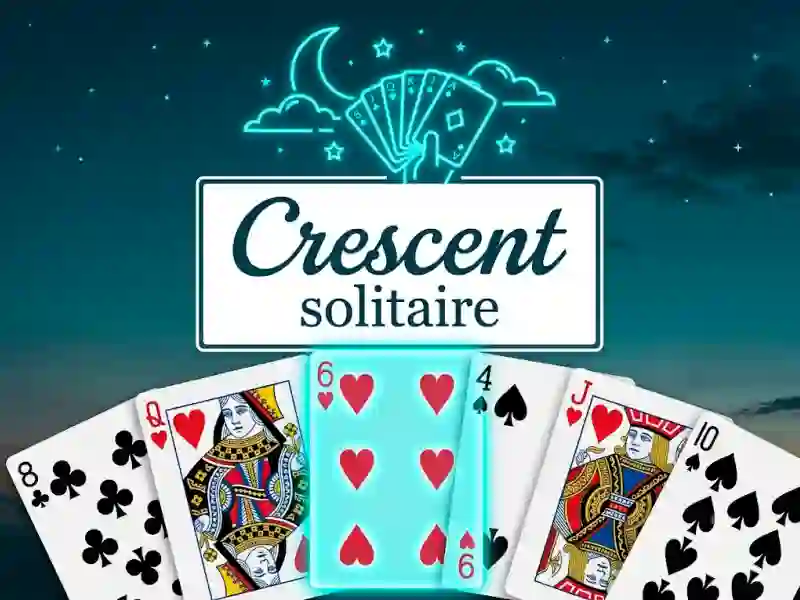
Crescent Solitaire e il tavolo a mezzaluna
Crescent Solitaire trasforma il normale layout delle carte in un tabellone curvo, così passi i tuoi turni a leggere l'anello esterno e a mandare le carte nelle otto basi centrali. Costruito con due mazzi, ti chiede di pensare in anticipo a quali ranghi si apriranno dopo, e puoi giocarci nel tuo browser senza download e senza registrazione.
Otto basi al centro
Il tuo obiettivo principale è spostare ogni carta dalla mezzaluna alle pile centrali, mantenendo ogni seme in ordine mentre costruisci in salita dagli assi o in discesa dai re. Quella disposizione fa contare ogni mossa, perché un percorso aperto può cambiare le prossime mosse sul tabellone. Se conosci Solitaire, la logica rango per rango ti sembrerà familiare, ma il layout impone una lettura diversa delle stesse regole.
Sequenza a due mazzi lungo la curva
Poiché Crescent Solitaire usa due mazzi, l'ordine in cui scopri le carte nell'arco esterno è una parte importante del rompicapo. Non stai solo liberando pile; stai decidendo quando scoprire una carta utile e quando trattenerti così che le basi continuino ad avanzare. Quella struttura stratificata lo avvicina a Spider Solitaire, visto che entrambi i giochi premiano una gestione attenta delle pile più dei clic affrettati.
Un obiettivo classico delle carte con una nuova forma del tabellone
La corsa alle basi dà al gioco la sua tensione, soprattutto quando un singolo rango può sbloccare più carte nella mezzaluna in una volta sola. Anche il layout in feltro curvo rende facile tenere traccia di ciò che è ancora bloccato sotto le pile esterne, ed è per questo che il percorso verso la vittoria sembra più visivo che in un rettangolo standard. Se vuoi un'altra sfida di carte con un focus familiare sulla costruzione, Solitaire Quest Klondike è un seguito naturale, mentre Crescent Solitaire si abbina bene agli stili Classico e Mobile su Card & Board.